
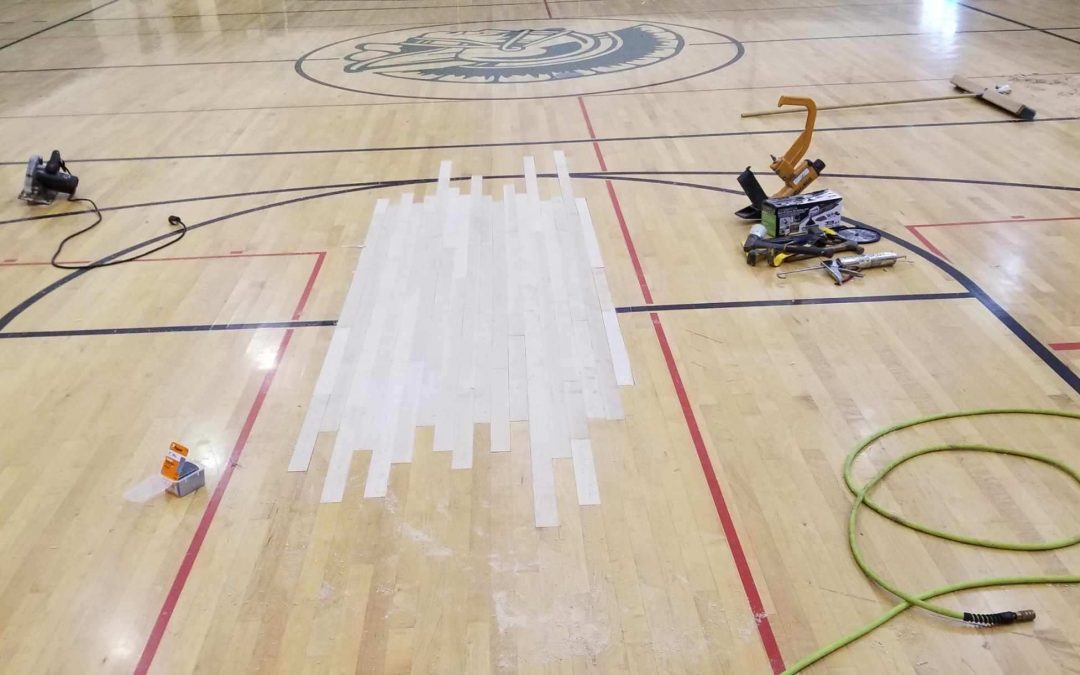
If your gym floor’s finish is dull or lightly scuffed but the wood underneath is still protected, you need a screen and recoat; if the finish is worn through to bare or grayed wood, you need a full sand and refinish. The recoat is inexpensive annual upkeep. The full refinish is a major restoration done every few years. Choosing the right one saves money in both directions – recoating a floor that’s too far gone wastes the coat, and fully sanding a floor that only needed a recoat spends thousands you didn’t have to
What is a screen and recoat?
A screen and recoat lightly abrades the existing finish and applies a fresh topcoat, without ever touching the wood. The ‘screen’ step scuffs the old finish just enough for a new coat to bond, then one or two coats of finish go on top. It’s the standard annual maintenance step for a gym floor – quick, affordable, and usually completed in a few days. It restores gloss and grip and reseals the surface, but it does not remove scratches that have reached the wood.
What is a full sand and refinish?
A full sand and refinish removes all the old finish and a thin layer of wood, then rebuilds the surface from bare wood up. The floor is sanded down completely, game lines and logos are repainted, and new sealer and finish coats are applied. It’s a much larger job – typically one to two weeks – and it’s how a worn, scratched, or discolored floor is brought back to like-new condition. Because it removes material, a floor can only be fully sanded a limited number of times over its life, which is exactly why annual recoats matter: they delay the day a full sand becomes necessary.
How often does each one need to happen?
A screen and recoat should be done about once a year, while a full sand and refinish is typically needed every 5 to 10 years depending on how heavily the floor is used. A lightly used floor that gets its annual recoat can stretch toward the longer end of that range; a heavily used floor, or one that’s skipped its recoats, will need the full treatment sooner. The recoat is the routine; the refinish is the reset.
How do I tell which one my floor needs?
Look at whether the wear has reached the wood: if you see only dull finish, light scuffs, or lost shine, a recoat will restore it; if you see bare or gray wood, deep scratches, worn-through game lines, or finish that’s flaking, it needs a full sand. A good quick test is that recoat-level wear sits on the finish, while refinish-level wear is in the wood. When it’s genuinely borderline, an in-person assessment settles it – the cost difference between the two is large enough that it’s worth getting right rather than guessing.
What happens if I choose the wrong one?
Recoating a floor that actually needs sanding wastes the coat, because fresh finish won’t bond properly or hide damage in bare wood, and you’ll be paying for a full sand soon anyway. Going the other way – fully sanding a floor that only needed a recoat – spends thousands unnecessarily and removes wood life the floor didn’t need to lose. This is why the honest answer matters more than the bigger invoice: the right call is whichever the floor actually needs, and a contractor worth trusting will tell you when the cheaper option is the correct one.
Not sure which your floor needs?
Wayfare Sports Floors screens, recoats, sands and refinishes wood gym floors for schools, colleges and municipalities across New York and beyond. If you’re not sure whether your floor needs a simple recoat or a full refinish, we’ll take a look and give you a straight answer – including when the less expensive option is the right one.
Request a quote →